
Dealing with a stuffy nose is never fun. When you’re feeling under the weather, you want something that actually works to help you breathe easier. You’ve probably seen cold and allergy medicines with ingredients like pseudoephedrine and phenylephrine. But do they really do the same thing? Let’s break down the pseudoephedrine vs phenylephrine debate to figure out which one is the better choice for your congestion.
Key Takeaways
When comparing pseudoephedrine vs phenylephrine, pseudoephedrine is the more effective decongestant for clearing nasal stuffiness.
Studies suggest that oral phenylephrine is not much better than a sugar pill for relieving nasal congestion.
Pseudoephedrine works by narrowing blood vessels in the nose, reducing swelling and making it easier to breathe.
Because pseudoephedrine can be misused, it’s sold behind the pharmacy counter and requires ID, unlike phenylephrine which is readily available on store shelves.
Both medications can have side effects like jitters or trouble sleeping, and certain health conditions or medications mean you should avoid them; always check with a doctor or pharmacist if you’re unsure.
Understanding Nasal Congestion Relief
How Pseudoephedrine Works
Nasal congestion, that annoying feeling of a blocked-up nose, happens when the blood vessels in your nasal passages swell up. Think of it like tiny balloons in your nose filling with extra fluid, making it hard to breathe. Pseudoephedrine is a medication that helps with this by acting on your sympathetic nervous system. It’s kind of like giving your body a little nudge to release adrenaline-like substances. These substances cause the blood vessels in your nose to tighten up, or constrict. When those vessels shrink, the swelling goes down, and you can breathe easier. It’s a direct approach to shrinking those swollen tissues.
The Role of Phenylephrine in Decongestion
Phenylephrine is another decongestant, and it’s designed to do a similar job: reduce swelling in the nasal passages. It also works by constricting blood vessels. However, the way it interacts with the body is a bit different from pseudoephedrine. While it aims to tighten those blood vessels, its effectiveness, especially when taken orally, has been a subject of much discussion and scientific study. It’s supposed to work by targeting specific receptors in the blood vessels, but many studies suggest it doesn’t quite hit the mark as effectively as its counterpart when you swallow it.
The basic idea behind most oral decongestants is to make the blood vessels in your nose smaller. This reduces the flow of blood to the swollen tissues, which in turn decreases the stuffiness. It’s a temporary fix, but when it works, it can feel like a lifesaver.
Comparing Pseudoephedrine vs Phenylephrine Effectiveness
Scientific Evidence on Phenylephrine’s Efficacy
So, does phenylephrine actually work for that stuffy nose? The scientific community has looked into this, and the results are… well, not great for oral phenylephrine. Some studies have found that when people take phenylephrine pills or liquids, their nasal congestion doesn’t improve any more than if they took a sugar pill, which is called a placebo. It seems like even when they tried higher doses, it didn’t make a difference in clearing the nose, but it did seem to bring on more side effects. This lack of effectiveness is largely due to how the body absorbs it. When you take oral phenylephrine, very little of it actually gets into your bloodstream to do its job. Think of it like trying to water a plant with a leaky watering can – not much makes it to the roots.
Pseudoephedrine’s Superior Performance
Now, let’s talk about pseudoephedrine. This is where things get different. Studies comparing pseudoephedrine directly to phenylephrine and placebos have shown a clear winner. After taking pseudoephedrine, people reported significantly less nasal congestion compared to those who took phenylephrine or a placebo. It works by narrowing the blood vessels in your nasal passages, which reduces swelling and helps you breathe easier. It’s like the opposite of that leaky watering can; it gets the job done.
Here’s a quick look at how they stack up:
Feature | Phenylephrine (Oral) | Pseudoephedrine |
|---|---|---|
Congestion Relief | Often no better than placebo | Significantly more effective than placebo |
Absorption | Poorly absorbed by the body | Well-absorbed, leading to better effectiveness |
Availability | Widely available over-the-counter | Behind the pharmacy counter with purchase restrictions |
FDA’s Stance on Oral Phenylephrine
Because of this evidence, the U.S. Food and Drug Administration (FDA) has actually proposed that oral phenylephrine isn’t effective for nasal congestion. They’ve noted that it’s not more effective than a placebo when taken by mouth. It’s important to remember this applies to the oral forms – like pills, liquids, and dissolving strips. Phenylephrine nasal sprays are a different story and can still be effective because they deliver the medication directly to the nose. But for those cold and allergy medicines you take by mouth, the FDA’s current thinking is that phenylephrine just doesn’t cut it for clearing a stuffy nose.
Accessibility and Purchase Restrictions
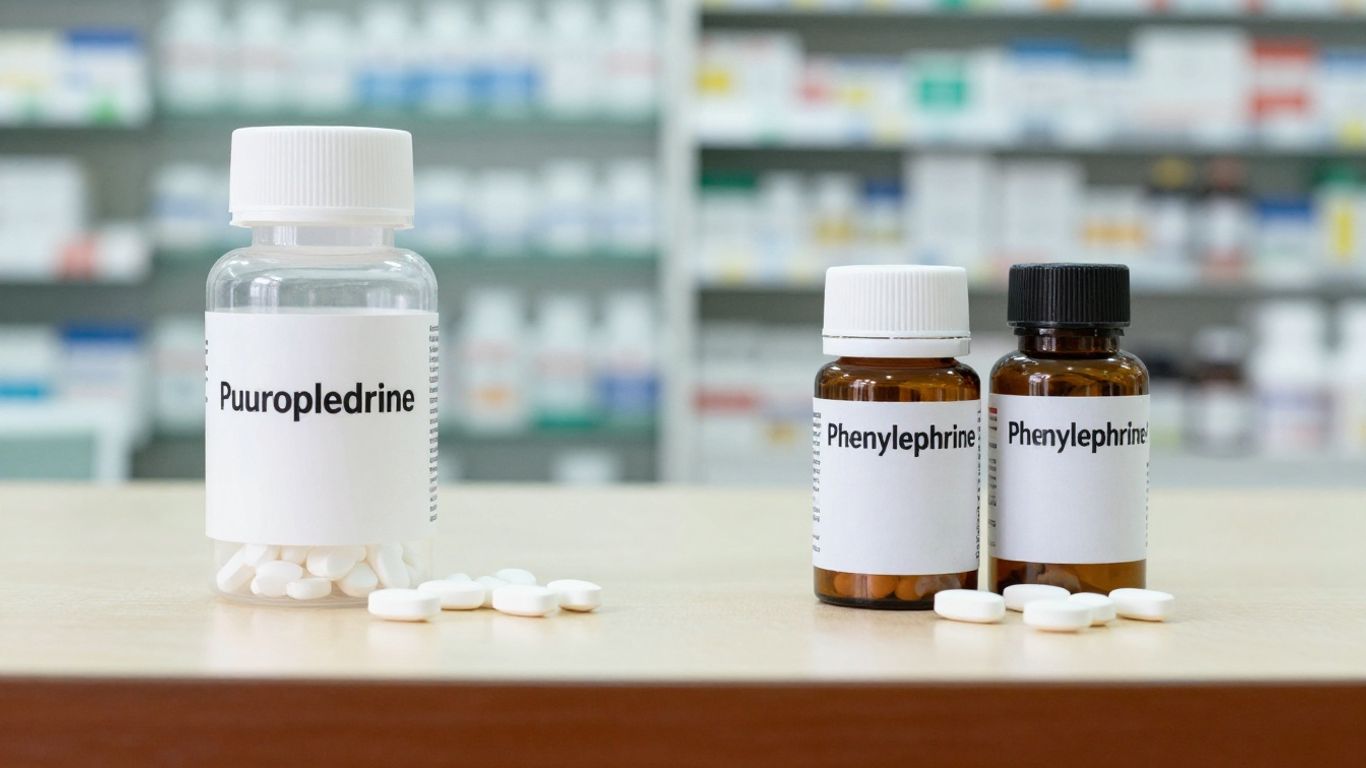
When you’re feeling stuffed up, figuring out how to actually get your hands on a decongestant can be a whole other hassle. It turns out, not all nasal relief is created equal when it comes to how you buy it. Phenylephrine products, like Sudafed PE, are pretty easy to find. You can grab them right off the shelf at most drugstores and even grocery stores. No special hoops to jump through there.
Over-the-Counter Availability of Phenylephrine
Phenylephrine is readily available as an over-the-counter (OTC) medication. This means you don’t need to talk to a pharmacist or doctor to buy it. It sits right there with other cold and allergy medicines, making it a convenient choice for many people dealing with a stuffy nose.
Behind-the-Counter Access for Pseudoephedrine
Pseudoephedrine, on the other hand, has a different story. You won’t find it just sitting on the shelf. Instead, you have to ask the pharmacist for it, and it’s kept behind the pharmacy counter. This isn’t just to make you work a little harder; it’s a security measure. You’ll also need to show a valid photo ID, like your driver’s license. This is because the amount you can buy is limited each day and month. It’s all part of a system to keep track of who’s buying it and how much.
Reasons for Pseudoephedrine’s Restrictions
So, why all the fuss about pseudoephedrine? The main reason is its potential to be used in making illegal drugs, specifically methamphetamine. Because it can be converted into this substance, regulations were put in place to make it harder for people to obtain large quantities. This helps law enforcement agencies combat the production of illicit drugs. It’s a trade-off: while it’s a very effective decongestant, its accessibility is restricted to prevent misuse. You can find more information on drug sales regulations in places like British Columbia here.
The restrictions on pseudoephedrine are a direct response to its diversion for illicit drug manufacturing. While this makes it less convenient to purchase, it’s a necessary step to address public safety concerns related to illegal substance production.
Potential Side Effects and Precautions
Even though these medications are meant to help you feel better, they aren’t without their own set of issues. It’s really important to know what you’re getting into before you pop that pill.
Common Side Effects of Both Decongestants
Both pseudoephedrine and phenylephrine can act like stimulants, which means you might feel a bit wired. Common complaints include feeling restless or jittery, and some people report dizziness. Trouble sleeping, or insomnia, is also a frequent visitor when you’re taking these. You might also experience a headache, nausea, or even feel a bit weak. If any of these side effects feel really bad or just don’t go away after a few days, it’s a good idea to stop taking the medication and give your doctor a call. Also, keep an eye out for fever or symptoms that don’t seem to be getting better within a week.
Who Should Avoid These Medications
These decongestants aren’t for everyone. There are specific health conditions where taking either pseudoephedrine or phenylephrine could cause more harm than good. You should probably steer clear if you have:
Allergies to the ingredients in the medication.
Diabetes.
An enlarged prostate that makes urinating difficult.
Glaucoma (this is more of a concern with pseudoephedrine).
Heart disease.
Thyroid problems.
High blood pressure that isn’t well-controlled.
Any upcoming surgery, including dental work.
Also, if you’re pregnant or breastfeeding, it’s always best to check with your healthcare provider before taking any decongestant. They’re generally not recommended during pregnancy.
Drug Interactions to Consider
This is where things can get a bit tricky. Both pseudoephedrine and phenylephrine can play not-so-nicely with other medications you might be taking. It’s not a complete list, but here are some major ones to watch out for:
MAOIs (Monoamine Oxidase Inhibitors): If you’re taking an MAOI, or have taken one in the last two weeks, do NOT take pseudoephedrine or phenylephrine. These older drugs, used for things like Parkinson’s and depression, can cause a dangerous spike in blood pressure when combined with decongestants. Examples include selegiline and phenelzine.
Caffeine: Try to cut back on coffee, tea, and other caffeinated items. Caffeine is also a stimulant, and it can make the side effects of decongestants, especially sleeplessness, much worse.
Blood Pressure Medications: These decongestants can raise your blood pressure, which means your blood pressure meds might not work as well. If your blood pressure is usually managed well, your doctor might say it’s okay to take a decongestant for a very short time, but you’ll likely need to monitor your blood pressure closely at home.
Other Blood Pressure Raising Drugs: Be careful about taking these decongestants with other medications that can also increase blood pressure, like steroids, certain immune suppressants, stimulants (like phentermine), and even common NSAIDs like ibuprofen.
Alcohol: It’s best to avoid alcohol altogether. It can dehydrate you, potentially worsen your cold symptoms, and also affect your blood pressure.
Always tell your doctor or pharmacist about everything you’re taking, including vitamins, supplements, and herbal remedies. You never know what might interact.
It’s also worth noting that taking pseudoephedrine and phenylephrine at the same time isn’t a good idea. Since phenylephrine isn’t very effective on its own, you won’t get any extra benefit, but you could definitely increase your chances of experiencing side effects.
Making an Informed Choice
So, you’ve got a stuffy nose and you’re trying to figure out which over-the-counter remedy is actually going to help. It’s a bit of a minefield out there, especially with the recent news about phenylephrine. Let’s break down how to make a choice that actually works for you.
When Phenylephrine Might Be Considered
Look, phenylephrine isn’t completely useless. It’s still available as a nasal spray, and in that form, it can offer some temporary relief by constricting blood vessels in your nose. If you’re looking for a quick, short-term fix and prefer a spray over a pill, it might be an option. However, for oral use, the science just isn’t there anymore. The consensus is that as a pill, it’s pretty much a dud.
Why Pseudoephedrine is Often Preferred
When it comes to oral decongestants, pseudoephedrine is generally considered the more effective option. It directly targets the swollen blood vessels in your nasal passages, making it easier to breathe. The catch, as we’ve discussed, is its accessibility. Because it can be misused to make illegal substances, it’s kept behind the pharmacy counter. This means you’ll need to ask the pharmacist for it and show ID, which is a bit of a hassle, but for many, the effectiveness is worth the extra step.
Here’s a quick look at the main differences:
Feature | Phenylephrine (Oral) | Pseudoephedrine (Oral) |
|---|---|---|
Effectiveness | Low/Ineffective | High |
Accessibility | Over-the-counter | Behind-the-counter |
Primary Use | Congestion relief | Congestion relief |
Side Effect Risk | Generally lower | Slightly higher |
Consulting Healthcare Professionals
Honestly, the best advice is always to chat with your doctor or pharmacist. They know your health history and can help you pick the right medication. They can also help figure out why you’re congested in the first place. Sometimes, it’s not just a simple cold; it could be allergies or something else that needs a different approach. They might suggest:
Nasal saline rinses: These can help clear out mucus and irritants.
Topical decongestant sprays: Like the phenylephrine spray, or others like oxymetazoline, for short-term use.
Antihistamines: If allergies are the culprit.
Steroid nasal sprays: For more persistent inflammation.
Navigating the world of over-the-counter medications can be confusing. With new information constantly emerging, it’s easy to feel lost. Remember that what works for one person might not work for another, and sometimes the simplest solutions are the most effective. Don’t hesitate to ask for help from the pros.
So, Which One Should You Grab?
Alright, so we’ve broken down the nitty-gritty of pseudoephedrine and phenylephrine. The bottom line? When you’re really stuffed up, pseudoephedrine is the one that actually gets the job done. Studies show it works, plain and simple. Phenylephrine, on the other hand, hasn’t really proven itself when taken by mouth – it’s pretty much like taking nothing. You’ll notice pseudoephedrine is kept behind the pharmacy counter and requires an ID, which is a bit of a hassle, but it’s for good reason. If you’re looking for real relief from that annoying nasal congestion, you’ll want to look for products with pseudoephedrine. Just remember to check the label and, as always, chat with your doctor or pharmacist if you’re unsure about what’s best for you.
Frequently Asked Questions
Which decongestant is better for a stuffy nose, pseudoephedrine or phenylephrine?
Pseudoephedrine is generally more effective at clearing nasal congestion compared to phenylephrine when taken by mouth. Studies suggest that oral phenylephrine doesn’t work much better than a sugar pill for relieving a stuffy nose.
Why is phenylephrine not very effective when taken as a pill?
When you swallow phenylephrine, your body doesn’t absorb much of it. This means only a tiny amount actually gets into your system to help with congestion. It’s like taking medicine that your body can’t really use.
Why can’t I just buy pseudoephedrine off the shelf?
Pseudoephedrine is kept behind the pharmacy counter because it can be used to make illegal drugs. To buy it, you need to show a photo ID, and there are limits on how much you can purchase each month. This is to help prevent it from being misused.
Are there any side effects I should know about?
Both medications can cause side effects like feeling jittery, dizzy, or having trouble sleeping. They can also raise your blood pressure. It’s important to talk to a doctor if you have heart problems, high blood pressure, or other health conditions before taking them.
Can I take phenylephrine and pseudoephedrine together?
It’s not a good idea to take both at the same time. Since phenylephrine isn’t very effective on its own, taking it with pseudoephedrine won’t likely give you extra relief and could increase your chances of experiencing side effects.
When might phenylephrine still be an option?
While oral phenylephrine isn’t great for congestion, phenylephrine nasal spray can still be effective because it’s applied directly to your nose. However, for pills or liquids, pseudoephedrine is usually the better choice if you can get it.